DLC CD 163: Difference between revisions
Marked this version for translation |
No edit summary |
||
| Line 4: | Line 4: | ||
<!--T:1--> | <!--T:1--> | ||
The DLC featuring the ČD 163 "Peršing" locomotive brings one of Central Europe's most famous electric locomotives to SimRail. It is designed for players who appreciate classic design, characteristic traction, and the feeling of real railway service. | The DLC featuring the ČD 163 "Peršing" locomotive brings one of Central Europe's most famous electric locomotives to SimRail. It is designed for players who appreciate classic design, characteristic traction, and the feeling of real railway service. | ||
The locomotive has been designed with an emphasis on atmosphere and realism – a fully functional cab, faithful driving characteristics, and authentic sounds create a powerful impression on every journey. The ČD 163 is ideal for regular passenger service as well as freight trains and is a timeless addition to the SimRail fleet. | The locomotive has been designed with an emphasis on atmosphere and realism – a fully functional cab, faithful driving characteristics, and authentic sounds create a powerful impression on every journey. The ČD 163 is ideal for regular passenger service as well as freight trains and is a timeless addition to the SimRail fleet. | ||
''- Description from Steam DLC page.'' | ''- Description from Steam DLC page.'' | ||
[[File:cd163 cez.jpg|thumb|CD163 030-0 - CEZ reskin]] | [[File:cd163 cez.jpg|thumb|CD163 030-0 - CEZ reskin]] | ||
<!--T: | <!--T:2--> | ||
==Locomotive in reality== | ==Locomotive in reality== | ||
The 163 series locomotive "Peršing", derived from the 363 series, is based on the need to operate on lines with 3 kV DC voltage. In the early 1980s, the situation in rail transport began to change, with the 140 and 141 series locomotives due to be phased out in 1985 without sufficient replacements. This led to Škoda commissioning a new series of locomotives capable of operating under DC traction. Although a prototype of the 163 series was never built, prototypes of the two-system ES 499.1 locomotives (today's 363 series) were used for development. The 163 series locomotives are therefore part of the so-called second generation of Škoda locomotives. | The 163 series locomotive "Peršing", derived from the 363 series, is based on the need to operate on lines with 3 kV DC voltage. In the early 1980s, the situation in rail transport began to change, with the 140 and 141 series locomotives due to be phased out in 1985 without sufficient replacements. This led to Škoda commissioning a new series of locomotives capable of operating under DC traction. Although a prototype of the 163 series was never built, prototypes of the two-system ES 499.1 locomotives (today's 363 series) were used for development. The 163 series locomotives are therefore part of the so-called second generation of Škoda locomotives. | ||
<!--T: | <!--T:3--> | ||
The production of 163 series locomotives took place in 1984-1986 (factory designation 71E) and later in 1991-1992 (99E) in the Škoda company in Pilsen in cooperation with ČKD Polovodiče. In addition to the newly produced locomotives, several units of the 163 series were built as a result of the change of chassis from the 363 series to the 162 series in 1993-2008. These locomotives are used in the Czech Republic, Slovakia and previously in Italy to haul passenger and freight trains. | The production of 163 series locomotives took place in 1984-1986 (factory designation 71E) and later in 1991-1992 (99E) in the Škoda company in Pilsen in cooperation with ČKD Polovodiče. In addition to the newly produced locomotives, several units of the 163 series were built as a result of the change of chassis from the 363 series to the 162 series in 1993-2008. These locomotives are used in the Czech Republic, Slovakia and previously in Italy to haul passenger and freight trains. | ||
At the same time, the 163 series locomotives are still active and successfully serving in their role as universal line locomotives. Some of these locomotives were previously leased to Poland, where they returned to the Czech Republic at the end of 2015. | At the same time, the 163 series locomotives are still active and successfully serving in their role as universal line locomotives. Some of these locomotives were previously leased to Poland, where they returned to the Czech Republic at the end of 2015. | ||
<!--T: | <!--T:4--> | ||
==Locomotive parameters== | ==Locomotive parameters== | ||
{| class="wikitable" | {| class="wikitable" | ||
| Line 39: | Line 35: | ||
|} | |} | ||
<!--T: | <!--T:5--> | ||
==Locomotive in the game== | ==Locomotive in the game== | ||
[[File:163 cab.jpg|thumb|CD 163 ]] | [[File:163 cab.jpg|thumb|CD 163 ]] | ||
The development of this locomotive was announced on 12.12.2023 and '''will be available as DLC in the game since 25.01.2026'''. This DLC will contain a total of 11 reskins in the base version, and the price of this DLC has been set at 14€. DLC contains 4 reskins for ČD Cargo and 7 reskins for České dráhy - 4 reskins in the modern "najbrt" paint scheme and 3 old paint schemes. | The development of this locomotive was announced on 12.12.2023 and '''will be available as DLC in the game since 25.01.2026'''. This DLC will contain a total of 11 reskins in the base version, and the price of this DLC has been set at 14€. DLC contains 4 reskins for ČD Cargo and 7 reskins for České dráhy - 4 reskins in the modern "najbrt" paint scheme and 3 old paint schemes. | ||
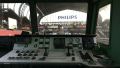
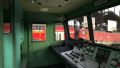
These versions do not differ greatly from the "original" ones that operate in the Czech Republic. These locomotives, which run in Poland, only have additional control buttons for the lights in the cab and an additional panel for SHP/Czuwak – Mirel is used in the Czech Republic. | These versions do not differ greatly from the "original" ones that operate in the Czech Republic. These locomotives, which run in Poland, only have additional control buttons for the lights in the cab and an additional panel for SHP/Czuwak – Mirel is used in the Czech Republic. | ||
<!--T: | <!--T:6--> | ||
''Serial numbers of locomotives that can be driven:'' | ''Serial numbers of locomotives that can be driven:'' | ||
*163 021-9 "Franek" (ČD Najbrt reskin) | *163 021-9 "Franek" (ČD Najbrt reskin) | ||
| Line 58: | Line 52: | ||
*163 041-7 "Kamila" (ČD Old reskin) | *163 041-7 "Kamila" (ČD Old reskin) | ||
<!--T: | <!--T:7--> | ||
===== Basic parameters of this locomotive ===== | ===== Basic parameters of this locomotive ===== | ||
* Maximum speed 120 Km/h | * Maximum speed 120 Km/h | ||
| Line 64: | Line 58: | ||
* ARR (Automatic cruise control) | * ARR (Automatic cruise control) | ||
<!--T: | <!--T:8--> | ||
== ARR (Automatic speed control) - Tempomat == | == ARR (Automatic speed control) - Tempomat == | ||
The locomotive is equipped with an '''Automatic Speed Control (ARR)''' feature—a cruise control system that allows the engineer to set a desired target speed. The operation of the ARR on this locomotive is slightly different from modern units like the EN96; more specific steps are required to engage the system correctly. | The locomotive is equipped with an '''Automatic Speed Control (ARR)''' feature—a cruise control system that allows the engineer to set a desired target speed. The operation of the ARR on this locomotive is slightly different from modern units like the EN96; more specific steps are required to engage the system correctly. | ||
<!--T: | <!--T:9--> | ||
==== How to Properly Operate ARR on Class 163 ==== | ==== How to Properly Operate ARR on Class 163 ==== | ||
For the ARR system to function correctly and ensure a smooth departure, follow this setup procedure: | For the ARR system to function correctly and ensure a smooth departure, follow this setup procedure: | ||
'''1. Driving Mode Selection''' First, select the correct mode using the mode selector switch. | '''1. Driving Mode Selection''' First, select the correct mode using the mode selector switch. | ||
* Set the switch to the '''"Auto" (Automat)''' position. | * Set the switch to the '''"Auto" (Automat)''' position. | ||
* ''Note: In "Manual" (Ruka) mode, you control the tractive effort directly, whereas in "Auto" mode, the computer manages power to reach the target speed.'' | * ''Note: In "Manual" (Ruka) mode, you control the tractive effort directly, whereas in "Auto" mode, the computer manages power to reach the target speed.'' | ||
<!--T: | <!--T:10--> | ||
'''2. Setting the Target Speed''' Use the speed selector lever or keypad to set your desired speed. | '''2. Setting the Target Speed''' Use the speed selector lever or keypad to set your desired speed. | ||
* The value is displayed on the digital screen (typically in 5 km/h increments). | * The value is displayed on the digital screen (typically in 5 km/h increments). | ||
* '''Important:''' The locomotive will not start pulling just by setting the speed; it requires a "consent" signal from the controller. | * '''Important:''' The locomotive will not start pulling just by setting the speed; it requires a "consent" signal from the controller. | ||
<!--T: | <!--T:11--> | ||
'''3. Tractive Current Limitation (Current Limit)''' Set the maximum current (Amperes) that the traction motors are allowed to draw. | '''3. Tractive Current Limitation (Current Limit)''' Set the maximum current (Amperes) that the traction motors are allowed to draw. | ||
* This determines how "aggressively" the locomotive accelerates. | * This determines how "aggressively" the locomotive accelerates. | ||
* In poor adhesion conditions (rain, ice), set a lower value to prevent wheel slip. | * In poor adhesion conditions (rain, ice), set a lower value to prevent wheel slip. | ||
<!--T:12--> | |||
'''3a. Tractive Current & Effort Limitation''' | '''3a. Tractive Current & Effort Limitation''' | ||
* '''Current Limit (Amperes):''' Sets the electrical limit to protect motors and prevent wheel slip. | * '''Current Limit (Amperes):''' Sets the electrical limit to protect motors and prevent wheel slip. | ||
* '''Tractive Effort Ratio (Poměrový tah):''' Sets what percentage of available power the ARR can use. For a smooth ride with light passenger cars, use a lower percentage. For heavy freight, set it to maximum. '''Note:''' If this is set to 0, the locomotive will not move. | * '''Tractive Effort Ratio (Poměrový tah):''' Sets what percentage of available power the ARR can use. For a smooth ride with light passenger cars, use a lower percentage. For heavy freight, set it to maximum. '''Note:''' If this is set to 0, the locomotive will not move. | ||
<!--T: | <!--T:13--> | ||
'''4. Initiating Movement (The "Consent" Rule)''' To start moving in ARR mode, follow this specific sequence: | '''4. Initiating Movement (The "Consent" Rule)''' To start moving in ARR mode, follow this specific sequence: | ||
# Release both the train and locomotive brakes. | # Release both the train and locomotive brakes. | ||
# Set the desired '''target speed''' (e.g., 80 km/h). | # Set the desired '''target speed''' (e.g., 80 km/h). | ||
| Line 105: | Line 91: | ||
# '''Crucial Step:''' Move the '''controller (power lever)''' to the '''"S" (Consent)''' or '''"J" (Drive)''' position and '''hold it there for 3–4 seconds'''. This delay is necessary for the ARR system to register the command and activate the traction. If released too quickly, the system may not engage. | # '''Crucial Step:''' Move the '''controller (power lever)''' to the '''"S" (Consent)''' or '''"J" (Drive)''' position and '''hold it there for 3–4 seconds'''. This delay is necessary for the ARR system to register the command and activate the traction. If released too quickly, the system may not engage. | ||
<!--T: | <!--T:14--> | ||
----'''5. Stopping and Braking''' | ----'''5. Stopping and Braking''' | ||
* '''Not an Autopilot:''' It is important to remember that ARR is '''not''' an autopilot designed for stopping at stations. | * '''Not an Autopilot:''' It is important to remember that ARR is '''not''' an autopilot designed for stopping at stations. | ||
* '''Manual Intervention:''' Before arriving at a stop, the engineer must manually set the target speed to '''0 km/h''' or, more commonly, '''intervene manually using the train brake'''. | * '''Manual Intervention:''' Before arriving at a stop, the engineer must manually set the target speed to '''0 km/h''' or, more commonly, '''intervene manually using the train brake'''. | ||
* The ARR system primarily controls the speed during travel but does not guarantee a precise or safe stop at a platform without the engineer's input. | * The ARR system primarily controls the speed during travel but does not guarantee a precise or safe stop at a platform without the engineer's input. | ||
<!--T: | <!--T:15--> | ||
==Locomotive Cold start procedure== | ==Locomotive Cold start procedure== | ||
#n/a | #n/a | ||
<!--T: | <!--T:16--> | ||
==Locomotive malfunctions== | ==Locomotive malfunctions== | ||
*'''n/a''' | *'''n/a''' | ||
<!--T: | <!--T:17--> | ||
==Gallery== | ==Gallery== | ||
<gallery caption="Pics from Game"> | <gallery caption="Pics from Game"> | ||
| Line 129: | Line 113: | ||
</gallery> | </gallery> | ||
<!--T: | <!--T:18--> | ||
== DLC Info == | == DLC Info == | ||
{| class="wikitable" | {| class="wikitable" | ||
| Line 153: | Line 137: | ||
|} | |} | ||
<!--T: | <!--T:19--> | ||
==Reference== | ==Reference== | ||
*[https://cs.wikipedia.org/wiki/Lokomotiva_163 <nowiki>[1]</nowiki>] – Wikipedia link (CZ) | *[https://cs.wikipedia.org/wiki/Lokomotiva_163 <nowiki>[1]</nowiki>] – Wikipedia link (CZ) | ||
</translate> | </translate> | ||
Revision as of 15:56, 16 January 2026
The DLC featuring the ČD 163 "Peršing" locomotive brings one of Central Europe's most famous electric locomotives to SimRail. It is designed for players who appreciate classic design, characteristic traction, and the feeling of real railway service. The locomotive has been designed with an emphasis on atmosphere and realism – a fully functional cab, faithful driving characteristics, and authentic sounds create a powerful impression on every journey. The ČD 163 is ideal for regular passenger service as well as freight trains and is a timeless addition to the SimRail fleet. - Description from Steam DLC page.

Locomotive in reality
The 163 series locomotive "Peršing", derived from the 363 series, is based on the need to operate on lines with 3 kV DC voltage. In the early 1980s, the situation in rail transport began to change, with the 140 and 141 series locomotives due to be phased out in 1985 without sufficient replacements. This led to Škoda commissioning a new series of locomotives capable of operating under DC traction. Although a prototype of the 163 series was never built, prototypes of the two-system ES 499.1 locomotives (today's 363 series) were used for development. The 163 series locomotives are therefore part of the so-called second generation of Škoda locomotives.
The production of 163 series locomotives took place in 1984-1986 (factory designation 71E) and later in 1991-1992 (99E) in the Škoda company in Pilsen in cooperation with ČKD Polovodiče. In addition to the newly produced locomotives, several units of the 163 series were built as a result of the change of chassis from the 363 series to the 162 series in 1993-2008. These locomotives are used in the Czech Republic, Slovakia and previously in Italy to haul passenger and freight trains. At the same time, the 163 series locomotives are still active and successfully serving in their role as universal line locomotives. Some of these locomotives were previously leased to Poland, where they returned to the Czech Republic at the end of 2015.
Locomotive parameters
| Traction | Electric | Maximum power | 3480 kW |
|---|---|---|---|
| Engine type | AL 4562 FiR | Maximum speed | 120 Km/h |
| Voltage | 3kV AC | Weight | 85 t |
Locomotive in the game

The development of this locomotive was announced on 12.12.2023 and will be available as DLC in the game since 25.01.2026. This DLC will contain a total of 11 reskins in the base version, and the price of this DLC has been set at 14€. DLC contains 4 reskins for ČD Cargo and 7 reskins for České dráhy - 4 reskins in the modern "najbrt" paint scheme and 3 old paint schemes. These versions do not differ greatly from the "original" ones that operate in the Czech Republic. These locomotives, which run in Poland, only have additional control buttons for the lights in the cab and an additional panel for SHP/Czuwak – Mirel is used in the Czech Republic.
Serial numbers of locomotives that can be driven:
- 163 021-9 "Franek" (ČD Najbrt reskin)
- 163 029-2 "Beata" (ČD Najbrt reskin)
- 163 030-0 "Agata" (ČD Najbrt reskin)
- 163 034-2 (ČD Cargo reskin)
- 163 042-5 "Oliwia" (ČD ČEZ reskin)
- 163 045-8 (ČD Cargo reskin)
- 163 046-6 (ČD Cargo blue reskin)
- 163 041-7 "Kamila" (ČD Old reskin)
Basic parameters of this locomotive
- Maximum speed 120 Km/h
- Locomotive does not have ETCS.
- ARR (Automatic cruise control)
ARR (Automatic speed control) - Tempomat
The locomotive is equipped with an Automatic Speed Control (ARR) feature—a cruise control system that allows the engineer to set a desired target speed. The operation of the ARR on this locomotive is slightly different from modern units like the EN96; more specific steps are required to engage the system correctly.
How to Properly Operate ARR on Class 163
For the ARR system to function correctly and ensure a smooth departure, follow this setup procedure: 1. Driving Mode Selection First, select the correct mode using the mode selector switch.
- Set the switch to the "Auto" (Automat) position.
- Note: In "Manual" (Ruka) mode, you control the tractive effort directly, whereas in "Auto" mode, the computer manages power to reach the target speed.
2. Setting the Target Speed Use the speed selector lever or keypad to set your desired speed.
- The value is displayed on the digital screen (typically in 5 km/h increments).
- Important: The locomotive will not start pulling just by setting the speed; it requires a "consent" signal from the controller.
3. Tractive Current Limitation (Current Limit) Set the maximum current (Amperes) that the traction motors are allowed to draw.
- This determines how "aggressively" the locomotive accelerates.
- In poor adhesion conditions (rain, ice), set a lower value to prevent wheel slip.
3a. Tractive Current & Effort Limitation
- Current Limit (Amperes): Sets the electrical limit to protect motors and prevent wheel slip.
- Tractive Effort Ratio (Poměrový tah): Sets what percentage of available power the ARR can use. For a smooth ride with light passenger cars, use a lower percentage. For heavy freight, set it to maximum. Note: If this is set to 0, the locomotive will not move.
4. Initiating Movement (The "Consent" Rule) To start moving in ARR mode, follow this specific sequence:
- Release both the train and locomotive brakes.
- Set the desired target speed (e.g., 80 km/h).
- Set the reverser lever to the "Forward" position.
- Crucial Step: Move the controller (power lever) to the "S" (Consent) or "J" (Drive) position and hold it there for 3–4 seconds. This delay is necessary for the ARR system to register the command and activate the traction. If released too quickly, the system may not engage.
5. Stopping and Braking
- Not an Autopilot: It is important to remember that ARR is not an autopilot designed for stopping at stations.
- Manual Intervention: Before arriving at a stop, the engineer must manually set the target speed to 0 km/h or, more commonly, intervene manually using the train brake.
- The ARR system primarily controls the speed during travel but does not guarantee a precise or safe stop at a platform without the engineer's input.
Locomotive Cold start procedure
- n/a
Locomotive malfunctions
- n/a
Gallery
- Pics from Game
-

-
-


DLC Info
| Date of announcement: | 12.12.2023 |
| Release date: | 25.01.2026 |
| Developer: | Javor (CZ) |
| Price: | 14 € |
| DLC will include: | 1 model / 11 reskins |
| Link to store: | Buy here |
Reference
- [1] – Wikipedia link (CZ)