DLC CD 163/es: Difference between revisions
Created page with "==Referencia== *[https://cs.wikipedia.org/wiki/Lokomotiva_163 <nowiki>[1]</nowiki>] – Enlace a Wikipedia (CZ)" |
Updating to match new version of source page |
||
| Line 1: | Line 1: | ||
<languages /> | <languages /> | ||
<div class="mw-translate-fuzzy"> | |||
'''En esta página faltan información y detalles debido a la falta de disponibilidad, lo que significa que dicha información puede no ser precisa al 100% .''' | '''En esta página faltan información y detalles debido a la falta de disponibilidad, lo que significa que dicha información puede no ser precisa al 100% .''' | ||
[[File:163 render1.jpg|thumb|CD163 - Primera representación gráfica]] | [[File:163 render1.jpg|thumb|CD163 - Primera representación gráfica]] | ||
==La locomotora en la realidad== | ==La locomotora en la realidad== | ||
La locomotora de la serie 163, derivada de la serie 363, se basa en la necesidad de operar en líneas con tensión de 3 kV CC. A principios de la década de 1980, la situación en el transporte ferroviario comenzó a cambiar, dado que en 1985 debían eliminarse gradualmente las locomotoras de las series 140 y 141 y no había suficientes unidades de reemplazo. Esto llevó a Škoda a poner en marcha una nueva serie de locomotoras capaces de funcionar con tracción DC. Aunque nunca se construyó un prototipo de la serie 163, se utilizaron prototipos de las locomotoras ES 499.1 de dos sistemas (la actual serie 363) para su desarrollo. Por lo tanto, las locomotoras de la serie 163 forman parte de la llamada segunda generación de locomotoras Škoda. | La locomotora de la serie 163, derivada de la serie 363, se basa en la necesidad de operar en líneas con tensión de 3 kV CC. A principios de la década de 1980, la situación en el transporte ferroviario comenzó a cambiar, dado que en 1985 debían eliminarse gradualmente las locomotoras de las series 140 y 141 y no había suficientes unidades de reemplazo. Esto llevó a Škoda a poner en marcha una nueva serie de locomotoras capaces de funcionar con tracción DC. Aunque nunca se construyó un prototipo de la serie 163, se utilizaron prototipos de las locomotoras ES 499.1 de dos sistemas (la actual serie 363) para su desarrollo. Por lo tanto, las locomotoras de la serie 163 forman parte de la llamada segunda generación de locomotoras Škoda. | ||
</div> | |||
<div lang="en" dir="ltr" class="mw-content-ltr"> | |||
The locomotive has been designed with an emphasis on atmosphere and realism – a fully functional cab, faithful driving characteristics, and authentic sounds create a powerful impression on every journey. The ČD 163 is ideal for regular passenger service as well as freight trains and is a timeless addition to the SimRail fleet. | |||
</div> | |||
<div lang="en" dir="ltr" class="mw-content-ltr"> | |||
''- Description from Steam DLC page.'' | |||
[[File:cd163 cez.jpg|thumb|CD163 030-0 - CEZ reskin]] | |||
</div> | |||
<div lang="en" dir="ltr" class="mw-content-ltr"> | |||
==Locomotive in reality== | |||
The 163 series locomotive "Peršing", derived from the 363 series, is based on the need to operate on lines with 3 kV DC voltage. In the early 1980s, the situation in rail transport began to change, with the 140 and 141 series locomotives due to be phased out in 1985 without sufficient replacements. This led to Škoda commissioning a new series of locomotives capable of operating under DC traction. Although a prototype of the 163 series was never built, prototypes of the two-system ES 499.1 locomotives (today's 363 series) were used for development. The 163 series locomotives are therefore part of the so-called second generation of Škoda locomotives. | |||
</div> | |||
La producción de las locomotoras de la serie 163 tuvo lugar entre 1984 y 1986 (designación de fábrica 71E) y más tarde entre 1991 y 1992 (99E), en la empresa Škoda en Pilsen en cooperación con ČKD Polovodiče. Además de las locomotoras de nueva producción, se construyeron varias unidades de la serie 163 como resultado del cambio de chasis de la serie 363 a la serie 162 entre 1993 y 2008. Estas locomotoras se utilizan en la República Checa, Eslovaquia y anteriormente en Italia para transportar trenes de pasajeros y mercancías. | La producción de las locomotoras de la serie 163 tuvo lugar entre 1984 y 1986 (designación de fábrica 71E) y más tarde entre 1991 y 1992 (99E), en la empresa Škoda en Pilsen en cooperación con ČKD Polovodiče. Además de las locomotoras de nueva producción, se construyeron varias unidades de la serie 163 como resultado del cambio de chasis de la serie 363 a la serie 162 entre 1993 y 2008. Estas locomotoras se utilizan en la República Checa, Eslovaquia y anteriormente en Italia para transportar trenes de pasajeros y mercancías. | ||
| Line 27: | Line 43: | ||
|} | |} | ||
<div class="mw-translate-fuzzy"> | |||
==La locomotora en el juego== | ==La locomotora en el juego== | ||
[[File:163 render2.jpg|thumb|CD 163 041-7, representación gráfica]] | [[File:163 render2.jpg|thumb|CD 163 041-7, representación gráfica]] | ||
El desarrollo de esta locomotora fue anunciado el 12.12.2023 y '''“estará disponible como contenido descargable (DLC) en el juego'''. | El desarrollo de esta locomotora fue anunciado el 12.12.2023 y '''“estará disponible como contenido descargable (DLC) en el juego'''. | ||
</div> | |||
<div lang="en" dir="ltr" class="mw-content-ltr"> | |||
These versions do not differ greatly from the "original" ones that operate in the Czech Republic. These locomotives, which run in Poland, only have additional control buttons for the lights in the cab and an additional panel for SHP/Czuwak – Mirel is used in the Czech Republic. | |||
</div> | |||
<div class="mw-translate-fuzzy"> | |||
''Números de serie que se pueden conducir:'' | ''Números de serie que se pueden conducir:'' | ||
*163 041-7 | *163 041-7 | ||
</div> | |||
<div class="mw-translate-fuzzy"> | |||
===== Parámetros básicos de esta locomotora ===== | ===== Parámetros básicos de esta locomotora ===== | ||
* Velocidad máxima de 120 Km/h | * Velocidad máxima de 120 Km/h | ||
* '''La locomotora carece de ETCS.''' | * '''La locomotora carece de ETCS.''' | ||
</div> | |||
<div class="mw-translate-fuzzy"> | |||
==Procedimiento de arranque "en frío" de la locomotora== | ==Procedimiento de arranque "en frío" de la locomotora== | ||
#n/a | #n/a | ||
</div> | |||
<div lang="en" dir="ltr" class="mw-content-ltr"> | |||
==== How to Properly Operate ARR on Class 163 ==== | |||
For the ARR system to function correctly and ensure a smooth departure, follow this setup procedure: | |||
</div> | |||
<div lang="en" dir="ltr" class="mw-content-ltr"> | |||
'''1. Driving Mode Selection''' First, select the correct mode using the mode selector switch. | |||
</div> | |||
<div lang="en" dir="ltr" class="mw-content-ltr"> | |||
* Set the switch to the '''"Auto" (Automat)''' position. | |||
* ''Note: In "Manual" (Ruka) mode, you control the tractive effort directly, whereas in "Auto" mode, the computer manages power to reach the target speed.'' | |||
</div> | |||
<div lang="en" dir="ltr" class="mw-content-ltr"> | |||
'''2. Setting the Target Speed''' Use the speed selector lever or keypad to set your desired speed. | |||
</div> | |||
<div lang="en" dir="ltr" class="mw-content-ltr"> | |||
* The value is displayed on the digital screen (typically in 5 km/h increments). | |||
* '''Important:''' The locomotive will not start pulling just by setting the speed; it requires a "consent" signal from the controller. | |||
</div> | |||
<div lang="en" dir="ltr" class="mw-content-ltr"> | |||
'''3. Tractive Current Limitation (Current Limit)''' Set the maximum current (Amperes) that the traction motors are allowed to draw. | |||
</div> | |||
<div lang="en" dir="ltr" class="mw-content-ltr"> | |||
* This determines how "aggressively" the locomotive accelerates. | |||
* In poor adhesion conditions (rain, ice), set a lower value to prevent wheel slip. | |||
'''3a. Tractive Current & Effort Limitation''' | |||
* '''Current Limit (Amperes):''' Sets the electrical limit to protect motors and prevent wheel slip. | |||
* '''Tractive Effort Ratio (Poměrový tah):''' Sets what percentage of available power the ARR can use. For a smooth ride with light passenger cars, use a lower percentage. For heavy freight, set it to maximum. '''Note:''' If this is set to 0, the locomotive will not move. | |||
</div> | |||
<div lang="en" dir="ltr" class="mw-content-ltr"> | |||
'''4. Initiating Movement (The "Consent" Rule)''' To start moving in ARR mode, follow this specific sequence: | |||
</div> | |||
<div lang="en" dir="ltr" class="mw-content-ltr"> | |||
# Release both the train and locomotive brakes. | |||
# Set the desired '''target speed''' (e.g., 80 km/h). | |||
# Set the '''reverser lever''' to the "Forward" position. | |||
# '''Crucial Step:''' Move the '''controller (power lever)''' to the '''"S" (Consent)''' or '''"J" (Drive)''' position and '''hold it there for 3–4 seconds'''. This delay is necessary for the ARR system to register the command and activate the traction. If released too quickly, the system may not engage. | |||
</div> | |||
<div lang="en" dir="ltr" class="mw-content-ltr"> | |||
----'''5. Stopping and Braking''' | |||
</div> | |||
<div lang="en" dir="ltr" class="mw-content-ltr"> | |||
* '''Not an Autopilot:''' It is important to remember that ARR is '''not''' an autopilot designed for stopping at stations. | |||
* '''Manual Intervention:''' Before arriving at a stop, the engineer must manually set the target speed to '''0 km/h''' or, more commonly, '''intervene manually using the train brake'''. | |||
* The ARR system primarily controls the speed during travel but does not guarantee a precise or safe stop at a platform without the engineer's input. | |||
</div> | |||
<div class="mw-translate-fuzzy"> | |||
==Fallos de la locomotora== | ==Fallos de la locomotora== | ||
*'''n/a''' | *'''n/a''' | ||
</div> | |||
<div class="mw-translate-fuzzy"> | |||
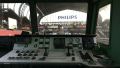
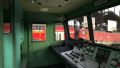
==Galería de imágenes== | ==Galería de imágenes== | ||
<gallery caption="Capturas del juego"> | <gallery caption="Capturas del juego"> | ||
| Line 50: | Line 137: | ||
File:163 render3.jpg | File:163 render3.jpg | ||
</gallery> | </gallery> | ||
</div> | |||
<div class="mw-translate-fuzzy"> | |||
== Información del DLC == | == Información del DLC == | ||
{| class="wikitable" | {| class="wikitable" | ||
| Line 70: | Line 159: | ||
|163 041-7 | |163 041-7 | ||
|} | |} | ||
</div> | |||
<div class="mw-translate-fuzzy"> | |||
==Referencia== | ==Referencia== | ||
*[https://cs.wikipedia.org/wiki/Lokomotiva_163 <nowiki>[1]</nowiki>] – Enlace a Wikipedia (CZ) | *[https://cs.wikipedia.org/wiki/Lokomotiva_163 <nowiki>[1]</nowiki>] – Enlace a Wikipedia (CZ) | ||
</div> | |||
<div lang="en" dir="ltr" class="mw-content-ltr"> | |||
==Reference== | |||
*[https://cs.wikipedia.org/wiki/Lokomotiva_163 <nowiki>[1]</nowiki>] – Wikipedia link (CZ) | |||
</div> | |||
Revision as of 15:41, 16 January 2026
En esta página faltan información y detalles debido a la falta de disponibilidad, lo que significa que dicha información puede no ser precisa al 100% .

La locomotora en la realidad
La locomotora de la serie 163, derivada de la serie 363, se basa en la necesidad de operar en líneas con tensión de 3 kV CC. A principios de la década de 1980, la situación en el transporte ferroviario comenzó a cambiar, dado que en 1985 debían eliminarse gradualmente las locomotoras de las series 140 y 141 y no había suficientes unidades de reemplazo. Esto llevó a Škoda a poner en marcha una nueva serie de locomotoras capaces de funcionar con tracción DC. Aunque nunca se construyó un prototipo de la serie 163, se utilizaron prototipos de las locomotoras ES 499.1 de dos sistemas (la actual serie 363) para su desarrollo. Por lo tanto, las locomotoras de la serie 163 forman parte de la llamada segunda generación de locomotoras Škoda.
The locomotive has been designed with an emphasis on atmosphere and realism – a fully functional cab, faithful driving characteristics, and authentic sounds create a powerful impression on every journey. The ČD 163 is ideal for regular passenger service as well as freight trains and is a timeless addition to the SimRail fleet.
- Description from Steam DLC page.

Locomotive in reality
The 163 series locomotive "Peršing", derived from the 363 series, is based on the need to operate on lines with 3 kV DC voltage. In the early 1980s, the situation in rail transport began to change, with the 140 and 141 series locomotives due to be phased out in 1985 without sufficient replacements. This led to Škoda commissioning a new series of locomotives capable of operating under DC traction. Although a prototype of the 163 series was never built, prototypes of the two-system ES 499.1 locomotives (today's 363 series) were used for development. The 163 series locomotives are therefore part of the so-called second generation of Škoda locomotives.
La producción de las locomotoras de la serie 163 tuvo lugar entre 1984 y 1986 (designación de fábrica 71E) y más tarde entre 1991 y 1992 (99E), en la empresa Škoda en Pilsen en cooperación con ČKD Polovodiče. Además de las locomotoras de nueva producción, se construyeron varias unidades de la serie 163 como resultado del cambio de chasis de la serie 363 a la serie 162 entre 1993 y 2008. Estas locomotoras se utilizan en la República Checa, Eslovaquia y anteriormente en Italia para transportar trenes de pasajeros y mercancías. Al mismo tiempo, las locomotoras de la serie 163 siguen activas y cumplen con éxito su papel de locomotoras de línea universal. Algunas de estas locomotoras fueron arrendadas previamente a Polonia, desde donde regresaron a la República Checa a finales de 2015.
Parámetros de la locomotora
| Tracción | Eléctrica | Potencia máxima | 3480 kW |
|---|---|---|---|
| Tipo de motor | AL 4562 FiR | Velocidad máxima | 120 Km/h |
| Voltaje | 3kV AC | Peso | 85 t |
La locomotora en el juego

El desarrollo de esta locomotora fue anunciado el 12.12.2023 y “estará disponible como contenido descargable (DLC) en el juego.
These versions do not differ greatly from the "original" ones that operate in the Czech Republic. These locomotives, which run in Poland, only have additional control buttons for the lights in the cab and an additional panel for SHP/Czuwak – Mirel is used in the Czech Republic.
Números de serie que se pueden conducir:
- 163 041-7
Parámetros básicos de esta locomotora
- Velocidad máxima de 120 Km/h
- La locomotora carece de ETCS.
Procedimiento de arranque "en frío" de la locomotora
- n/a
How to Properly Operate ARR on Class 163
For the ARR system to function correctly and ensure a smooth departure, follow this setup procedure:
1. Driving Mode Selection First, select the correct mode using the mode selector switch.
- Set the switch to the "Auto" (Automat) position.
- Note: In "Manual" (Ruka) mode, you control the tractive effort directly, whereas in "Auto" mode, the computer manages power to reach the target speed.
2. Setting the Target Speed Use the speed selector lever or keypad to set your desired speed.
- The value is displayed on the digital screen (typically in 5 km/h increments).
- Important: The locomotive will not start pulling just by setting the speed; it requires a "consent" signal from the controller.
3. Tractive Current Limitation (Current Limit) Set the maximum current (Amperes) that the traction motors are allowed to draw.
- This determines how "aggressively" the locomotive accelerates.
- In poor adhesion conditions (rain, ice), set a lower value to prevent wheel slip.
3a. Tractive Current & Effort Limitation
- Current Limit (Amperes): Sets the electrical limit to protect motors and prevent wheel slip.
- Tractive Effort Ratio (Poměrový tah): Sets what percentage of available power the ARR can use. For a smooth ride with light passenger cars, use a lower percentage. For heavy freight, set it to maximum. Note: If this is set to 0, the locomotive will not move.
4. Initiating Movement (The "Consent" Rule) To start moving in ARR mode, follow this specific sequence:
- Release both the train and locomotive brakes.
- Set the desired target speed (e.g., 80 km/h).
- Set the reverser lever to the "Forward" position.
- Crucial Step: Move the controller (power lever) to the "S" (Consent) or "J" (Drive) position and hold it there for 3–4 seconds. This delay is necessary for the ARR system to register the command and activate the traction. If released too quickly, the system may not engage.
5. Stopping and Braking
- Not an Autopilot: It is important to remember that ARR is not an autopilot designed for stopping at stations.
- Manual Intervention: Before arriving at a stop, the engineer must manually set the target speed to 0 km/h or, more commonly, intervene manually using the train brake.
- The ARR system primarily controls the speed during travel but does not guarantee a precise or safe stop at a platform without the engineer's input.
Fallos de la locomotora
- n/a
Galería de imágenes
- Capturas del juego
-

-
-

Información del DLC
| Fecha del anuncio: | 12.12.2023 |
| Fecha de distribución: | n/a |
| Desarrollador: | Javor (CZ) |
| Precio: | n/a |
| El DLC incluirá: | 163 041-7 |
Referencia
- [1] – Enlace a Wikipedia (CZ)
Reference
- [1] – Wikipedia link (CZ)